

You’ve navigated the post-storm chaos, you’ve wrangled with carrier adjusters, and you’ve built a business. But let’s be real, are you really building a business, or just constantly putting out fires? We’ve all seen the traditional SWOT analysis: four neat little boxes, filled with buzzwords that rarely translate to real-world impact. Today, we’re ripping up that template and crafting a dynamic, actionable plan—specifically for you, the public adjusting professional.
What is a SWOT Matrix? (And Why You Should Care)
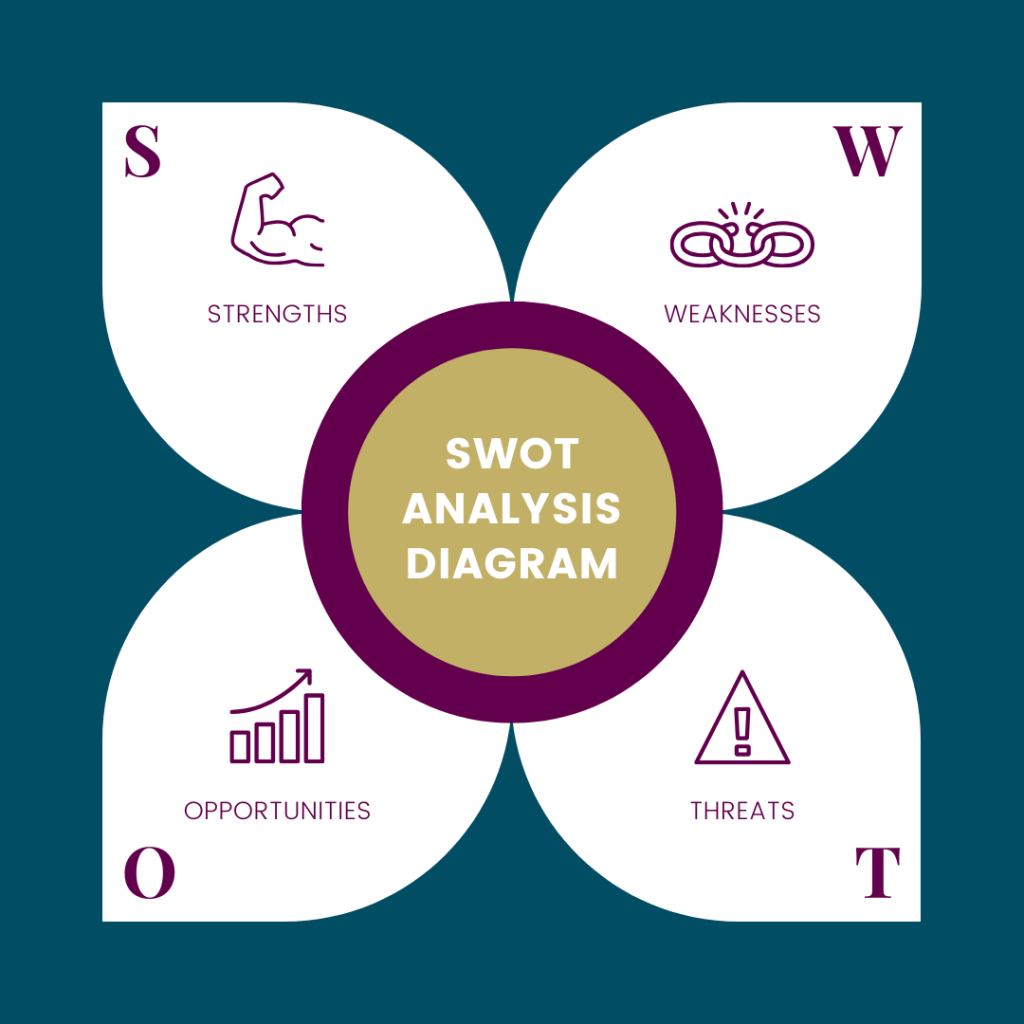
Before we get into the nitty-gritty, let’s cover the basics. A SWOT matrix is a simple, yet powerful tool used for strategic planning. It breaks down your business into four key areas:
- Strengths: What your business does well. Internal factors that give you an advantage.
- Weaknesses: Areas where your business could improve. Internal factors that hold you back.
- Opportunities: External factors that your business could capitalize on.
- Threats: External factors that could negatively impact your business.
To use it, you simply create a four-quadrant grid, list relevant points in each section, and then analyze the relationships between them. This helps you identify strategic actions to take. Now, let’s go beyond the basic matrix, and make it work for you.
The Public Adjuster’s Unique ‘Strengths’ (Your Superpowers)
Let’s acknowledge the obvious: you know your industry. You’ve got the battle scars to prove it. Regulatory changes? Claim intricacies? You eat that for breakfast. This deep expertise, that’s your superpower. And let’s not forget the network, the referrals that keep the business flowing. But here’s the million-dollar question: How do we convert that expertise into scalable growth? How do we build a system, not just a series of successful claims?
‘Weaknesses’ – The Cracks in the Hull (Let’s Fix ‘Em)
Now, let’s talk about the elephants in the room. You’re brilliant at claims, but maybe not so brilliant at KPI tracking, documented training systems, or scalable financial models. That’s okay. Many of you wear every hat, and that’s a recipe for burnout, not business growth. We’re talking about unorganized processes, reluctance to embrace new tech, and the nagging feeling that you’re always one claim away from chaos. And let’s be honest, where’s the 3-5 year strategic plan? Where’s the defined brand that sets you apart? These are the cracks we need to seal.
‘Opportunities’ – Riding the Wave of Change (Catch the Big One)
Here’s where things get exciting. The public adjusting world is ripe with opportunity. Diversifying into commercial claims? Expanding service offerings? These aren’t just ideas; they’re potential game-changers. And with tech advancing at warp speed, there’s a goldmine of efficiency waiting to be tapped. But, and this is crucial, are you looking beyond insurance trends? Are you keeping an eye on broader business trends? Because that’s where the real magic happens.
‘Threats’ – Navigating the Turbulent Waters (Don’t Get Washed Away)
Let’s face it, the market’s volatile. Regulatory changes, economic uncertainty, and stiff competition—these are the storms you need to weather. And yes, you’re experts at dealing with insurance regulations, but what about the broader market shifts? Cash flow instability, the constant fear of the next big downturn—these are threats that need proactive strategies, not reactive scrambling.
My Dynamic SWOT Approach – More Than Just a Four-Box Exercise (This is Where the Magic Happens)
Here’s where we ditch the static matrix and embrace a dynamic, living SWOT. This isn’t about filling boxes; it’s about building a system. We’re talking about integrating SWOT elements with your operational best practices and claim management processes. It’s about translating insights into actionable strategies, tracking KPIs, and mastering financial literacy. It’s about building a business that works for you, not the other way around.
Tailoring SWOT for Public Adjusting Professionals (This is for You)
This isn’t a one-size-fits-all approach. We’re crafting a SWOT analysis specifically for the public adjusting world. We’re addressing talent management, marketing, and branding challenges head-on. We’re building clear financial plans and exit strategies. We’re finally getting those operational technologies implemented, and creating documented training systems. Let’s build a 3-5 year plan, so you can build equity, and have a life.
Actionable Steps and Next Moves (Lets Get To Work)
So, what’s next? Let’s get practical. Conduct a thorough SWOT analysis, but don’t let it gather dust. Prioritize those elements, focus on high-impact strategies, and collaborate with your team. And if you’re serious about taking your business to the next level, let’s talk about one-on-one coaching. Because here’s the truth: you’re not in this alone.
Charting Your Course to Success
A well-executed SWOT analysis isn’t just a tool; it’s a roadmap. It’s about embracing strategic planning, continuous improvement, and building a business that thrives, not just survives. It’s about achieving work-life balance and creating a legacy. So, let’s chart your course to success. Let’s build a business that’s as resilient as you are. And remember, the storms will come, but with the right plan, you’ll not only weather them, you’ll emerge stronger.


